Impact-Resistant Shingles: An Oklahoma Guide
Impact-resistant shingles are tested to survive simulated large hail without fracturing - the damage class that retires ordinary roofs in this metro.
Read the Guide
Hail fractures shingle mats from within, often invisibly - the roof can look whole from the street while its surface has been spent stone by stone.
Problem: Hail fractures shingle mats from within, often invisibly - the roof can look whole from the street while its surface has been spent stone by stone.
Solution: Read the storm properly: soft metals for stone size, test squares per slope for functional hits, splits separated from bruises, and everything photographed early.
When to call: Call for an inspection within days of any hail event that dents the soft metals on your home - that is the local signal that the shingles took real strikes.
No roof topic in Oklahoma City generates more confusion - or more doorstep opinion - than hail. One visitor says the roof is destroyed; another says it is fine; the homeowner is left holding two certainties and no evidence. This guide explains what hail physically does to a roof, how a careful inspection separates functional damage from cosmetic noise, and what to do in the days after a storm crosses your street.
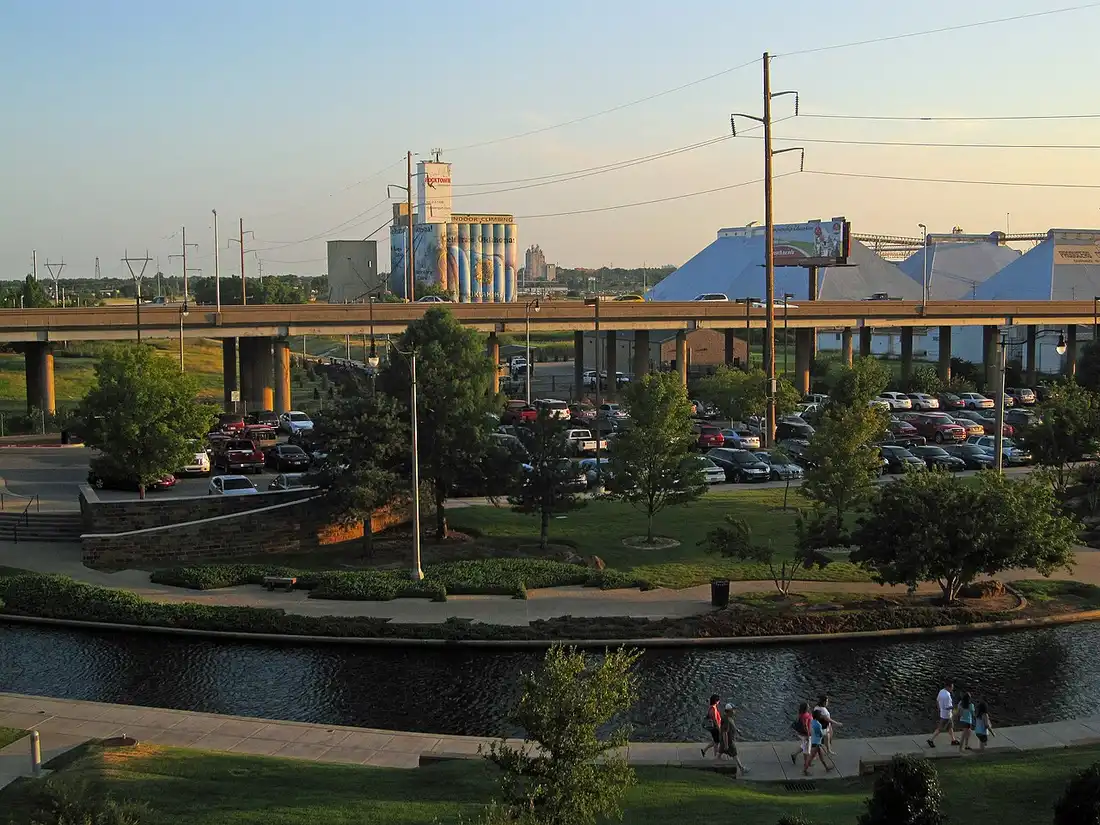
Oklahoma City sits in the heart of the southern plains, where the Canadian River - renamed the Oklahoma River through the city - crosses Tornado Alley itself. The roof calendar here is written by spring supercells with large hail and damaging wind, by summers hot enough to soften shingle asphalt for weeks at a stretch, and by winters that swing from mild days to ice storms. An Oklahoma City roof is not tested by one climate - it is tested by all of them, in turns, every year.
A shingle is granules over asphalt over a fiberglass mat. A hailstone's strike drives energy through the granules into that mat, and the mat - the shingle's skeleton - fractures at the impact point. The surface above can look nearly intact: a scuffed spot, some loosened granules. Underneath, the waterproofing and the strength are broken at that point, permanently.
Time finishes the strike's work. Sun cooks the exposed asphalt in the fracture, freeze-thaw wedges it wider each winter, and granules keep shedding from the weakened area. Months to a few years later the spot opens. This delay - storm in April, leak two winters on - is why hail is argued about, and why the inspection that matters happens in April, while the fracture is fresh and provable.
The read starts with the soft metals, which record the storm like instruments: vent caps, flashing, gutter faces. Their denting sizes and directions the stones before a single shingle is touched. Then the slopes are read in test squares - marked areas where every hit is examined by hand, because a functional hit feels different from a cosmetic one: the mat gives under pressure where it fractured.
The output is arithmetic, not adjectives: hits per test square, per slope, split versus bruised, weighed against the roof's age and remaining surface. That arithmetic is what repair-versus-replace decisions are made of - and it can be re-measured by any second inspector, which is the test of whether it was real.
Cosmetic hail marks scuff granules without fracturing mats - common on newer, heavier shingles in smaller hail. It shortens nothing important and needs nothing but a record. Repairable damage means functional hits in limited areas: split shingles and localized sections that can be replaced in kind on an otherwise sound roof.
Spent is the verdict when functional hits spread across slopes at density - the surface as a system has been retired by the storm even though it still sheds most rain. That roof is not leaking yet; it is leaking eventually, in many places, on the weather's schedule. The honest scope for it is replacement of the affected slopes or the whole roof, drawn from the hit map, not the headline.
Two adjacent roofs can honestly earn opposite hail verdicts, and the reasons are structural: the swath's edge can cross between the houses; one roof is five years old with a flexible mat and the other is eighteen with a brittle one; one has steep slopes that shed impact angles differently. Hail verdicts that respect those variables look inconsistent from the sidewalk and are consistent on the roof.
This is also why 'the whole street is replacing' is evidence but not proof for your address. It proves the storm carried damaging stones to your street. What they did to your mat, at your roof's age, is a separate measurement - and it is the measurement, not the street's consensus, that your scope should follow.
The circles and arrows that appear on roofs after storms are an inspector's map: hits marked, test squares outlined, slopes coded. They are a working language, and like any language they can be used honestly or theatrically. Marks that correspond to hand-checked mat fractures, counted in standard squares, are a scope's foundation. Marks scattered for effect, without counts or photos, are decoration.
Homeowners can ask one clarifying question that separates the two: 'show me the count per square and a photo of a fractured mat.' A real inspection answers it in seconds. Treat the answer - or its absence - as the inspection's true executive summary.
Hail damage has a physics that explains its arguments. The stone's energy goes into the shingle mat, fracturing the fiberglass from within while the surface can look nearly unmarked. Granules loosen over the following weeks and months, the fracture weathers open, and the spot ages years in a season. Every hail disagreement - between neighbors, between roofers, between owners and insurers - is at bottom a disagreement about that hidden middle step.
That is the service side of this guide's subject. When you are ready, the Hail Damage Repair page carries the process, the coverage by neighborhood and the number to call.
Dented vent caps, flashing and gutters tell you the storm carried real stones before you book anyone.
Fresh fractures and granule patterns are legible evidence; both fade on the weather's schedule.
Hits counted per slope with the mat checked by hand - adjectives are not a scope.
Photos, report and any repair records in one folder keyed to the event.
Check the soft metals after every hail event - they report the storm's size honestly.
Photograph granule piles at the outlets before rain washes the evidence away.
Ask any inspector for counts per test square and one photo of a fractured mat.
Keep the storm's date with the report; undated hail findings age into opinions.
A hail inspection worth its name delivers the storm's measurements: soft-metal readings, test squares per slope with functional-hit counts, split-versus-bruise separation, and photographs keyed to each finding.
It also delivers the scope logic - which slopes are repairable, which are spent, and the reasoning - so the claim conversation and the repair conversation run on the same document.
A professional hail read is a measurement exercise: soft metals sized, test squares laid per slope, every hit checked by hand for mat fracture, splits and bruises recorded separately, photographs keyed to the counts. The scope is then arithmetic - density against the roof's age and remaining surface - and it is written so any second inspector can re-measure it and land in the same place.
Verdicts from the driveway - hail's functional damage is invisible from there.
Letting the street's replacement wave substitute for your own roof's measurement.
Waiting for a leak to 'prove' damage while the fractures weather beyond dating.
Allowing chalk marks without counts, photos or a scope conversation.
Hail will keep its Oklahoma City appointments whether roofs are read or not. The homeowners who come out of storm seasons whole are the ones whose roofs were measured while the evidence was fresh. If the soft metals on your house are dented, the read is already worth booking.
Impact-resistant shingles are tested to survive simulated large hail without fracturing - the damage class that retires ordinary roofs in this metro.
Read the GuideThere is no honest per-square price for a new roof, because the quote is built from your roof's measured facts - and two roofs on the same street can differ by multiples.
Read the GuideYou can tell whether the storm was real - soft-metal dents, granule surges, scattered spots. Whether it was functional is a roof-side, hand-on-mat question. Ground signs justify the inspection; they are not the inspection.
Stones around an inch and up can fracture mats, with functional damage rising steeply with size, hardness and wind. The roof's age bends the line both ways: a brittle fifteen-year-old mat fractures under stones a new heavy shingle shrugs off.
Usually not. Splits can leak at once, but the common bruise pattern takes seasons to open. The roof that 'survived the storm fine' and leaks two winters later is hail's signature timeline - which is why the claim and the repair logic run on the inspection date, not the leak date.
The one with the arithmetic. Ask both for test-square counts, split-versus-bruise findings and photographs, slope by slope. The verdict that survives re-measurement by a second inspector is the one to build on.
One call connects you with a roofing professional serving Oklahoma City and the surrounding communities - inspection, repair, replacement and upkeep.
📞 Call Now