Impact-Resistant Shingles: An Oklahoma Guide
Impact-resistant shingles are tested to survive simulated large hail without fracturing - the damage class that retires ordinary roofs in this metro.
Read the Guide
Storm evidence fades on a schedule of weeks: granules wash, creases settle, debris gets hauled - and undocumented damage becomes undecidable damage.
Problem: Storm evidence fades on a schedule of weeks: granules wash, creases settle, debris gets hauled - and undocumented damage becomes undecidable damage.
Solution: Photograph first (wide, then close, with scale), keep date metadata intact, label by slope, and let nothing be repaired ahead of the inspection except safety and covering.
When to call: Call for the documentation-grade inspection within days of the event, while the storm's signature is still legible on the roof.
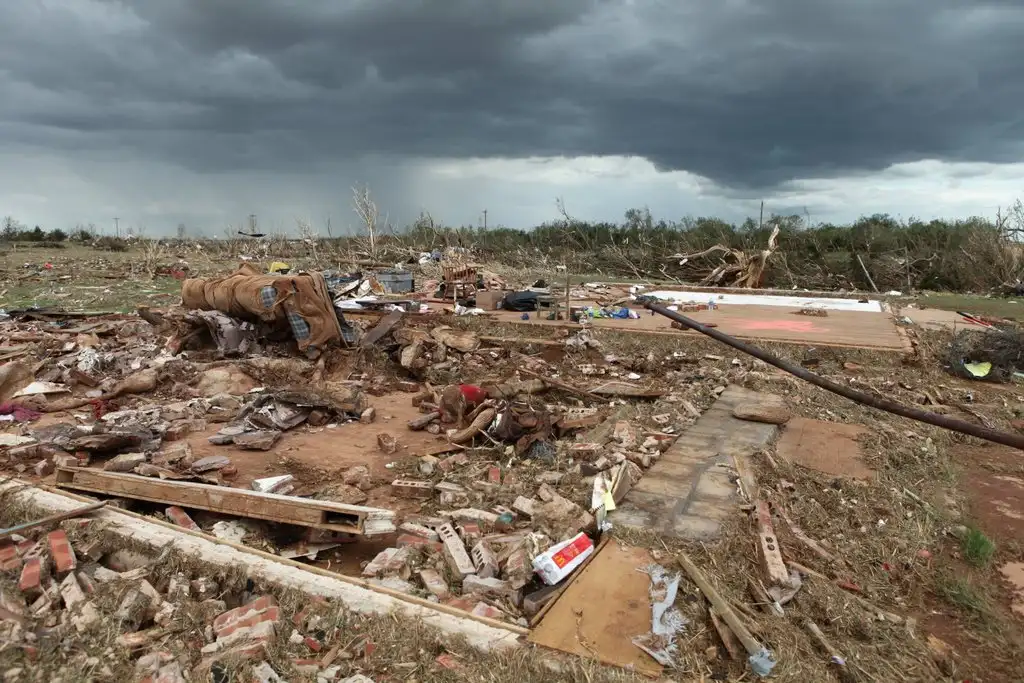
In the week after a major storm, Oklahoma County roofs hold evidence the way a chalkboard holds writing - clearly, and not for long. The granule patterns wash toward the gutters, creased shingles settle flat and innocent, helpful relatives haul the debris that proved the wind's path. Every later conversation - with an insurer, a buyer, a second roofer - will price the storm from whatever record survives. This guide is about building that record in the first days, when it is cheap, complete and true.
Hail is the signature threat. Central Oklahoma sits in the part of the country where hailstones reach golf-ball size and larger with some regularity - the May 2010 hailstorm alone worked over roofs across the whole metro in a single afternoon. Bruised, cracked and granule-stripped shingles may not leak the week after a storm; they fail across the following seasons, which is why hail here is an inspection question before it is a repair question.
The sequence matters more than the camera: wide shots of every slope from the ground, then close work - the debris where it lies, the creases, the dented soft metals, a coin or ruler beside a hail mark for scale. Interior water gets the same treatment, ceilings and walls dated by the phone in your hand. Nothing gets cleaned, hauled or repaired ahead of the camera except what safety and covering demand.
Metadata is part of the evidence: phone photographs carry dates, and re-saving them through apps that strip that data quietly saws the legs off the file. Keep originals, back them up off the phone the same week, and label each set by slope or room while you still remember which was which.
The inspection that follows your photographs converts images into findings: hail hits counted per test square, creases and lifts tallied per slope, splits separated from bruises, every finding keyed to a photo. That arithmetic is what a scope - and a claim - is built from, and it can be re-measured by any second inspector, which is the test of whether it was real.
The honest file also separates: this damage is the storm's, this wear was already there. Owners sometimes fear that admission; experienced adjusters and roofers know it does the opposite. A report that plainly labels pre-existing wear as wear makes its storm findings more believable, and credibility is the file's currency in every later argument.
One repair outranks documentation: the covering. A storm-opened roof gets tarped or dried-in as soon as it safely can - photographed first, covered second, and the covering itself invoiced and filed. Water admitted while paperwork waited is damage nobody's file can undo.
Then keep everything in one folder, paper and digital: the dated photos, the inspection report, the covering invoice, every scope and receipt that follows. Months later, when the yard is clean and memories have blurred, that folder is the storm - the only version of it that still exists.
Both audiences read the same file with the same questions: was there a storm, did it reach this roof, and does the damage pattern match it? Dated photographs answer the first two cheaply; the inspection's measured findings answer the third. Files that lead with conclusions ('the storm destroyed my roof') and follow with no measurements ask the reader to supply the evidence - readers in claims work do not supply evidence; they weigh it.
The wear-versus-damage separation deserves emphasis because it feels counterintuitive to owners: a report that plainly labels pre-existing wear as wear makes its storm findings more believable, not less. Credibility is the file's currency, and it is earned exactly there.
The expensive mistakes are ordinary helpfulness: the yard cleaned before photographs, the debris hauled, the damaged shingles replaced by a well-meaning relative before any inspection. Each act erases a line of the record. The other classic is the undated, unlocated photo dump - two hundred images with no sequence, no scale and no slope identified, which documents effort rather than damage.
The fix is procedural, not technical: photograph first (wide, then close, with something for scale), keep the phone's date metadata intact, note which slope each set belongs to, and let nothing be repaired or removed ahead of the inspection except what safety and covering demand. That order, followed once, is the whole discipline.
Wind damage is best understood as an audit result. Every gust asks the roof the same questions - are the seals alive, are the nails where they belong, are the edges sound - and the roof eventually answers in public. The scatter in the yard is the report card; the creases and lifted tabs still on the roof are the grades that have not been published yet.
That is the service side of this guide's subject. When you are ready, the Wind Damage Repair page carries the process, the coverage by neighborhood and the number to call.
Wide then close, debris in place, scale in frame, every slope and every stained ceiling.
Metadata intact, copies off the phone, sets labeled by slope or room.
Per-slope findings with counts and photographs - adjectives are not a scope.
Safety and dry-in first after the photos; every invoice into the storm folder.
Photograph debris where it lies before anyone hauls it away.
Keep phone photo metadata intact - do not re-save images through stripping apps.
Label every photo set by slope or room as you take it.
Back the storm folder up off-site the same week you build it.
A documentation-grade inspection delivers per-slope findings with measurements - hail counts per test square, crease and lift tallies, keyed photographs - and a written separation of storm damage from prior wear.
It also dates and ties the findings to the specific event, so the file stands on its own months later when memories have blurred and the yard is clean.
A professional documentation visit treats the roof as evidence: debris photographed in place, hail counted per test square with mat fractures verified by hand, creases and lifts tallied per slope, soft metals read for the storm's size and direction, and every finding keyed to a dated photograph. The report then does the hardest thing in claims work - it separates storm damage from prior wear in writing, which is precisely what makes its storm findings stand up.
Cleaning the yard and hauling debris before the camera pass.
A photo dump with no dates, no slopes and no scale - effort documented, damage not.
Letting anything be repaired ahead of the inspection beyond safety and covering.
Leading the file with conclusions instead of measurements.
In the week after the storm, documentation feels like paperwork. In the month after, it is the difference between a settled scope and an endless argument. Build the file while the evidence is lying in your yard - it is the simplest roofing work you will ever do.
Impact-resistant shingles are tested to survive simulated large hail without fracturing - the damage class that retires ordinary roofs in this metro.
Read the GuideHail fractures shingle mats from within, often invisibly - the roof can look whole from the street while its surface has been spent stone by stone.
Read the GuideGranule evidence washes measurably with the first hard rains; creases settle over weeks; debris disappears as fast as neighborhoods clean up. The practical window for a clean read is days to a few weeks - which is why the first-days discipline matters.
It is thinner, not dead: roof-side evidence - mat fractures, crease patterns, soft-metal dents - survives on the roof itself longer than yard evidence does. Book the measured inspection promptly; the roof still holds most of its testimony.
Both files are better than either. Your dated ground and interior photos, made before anything moved, plus the inspector's measured roof-side findings, make the complete record. The roofer's file alone starts after the yard was already touched.
Expect it - most roofs carry both, and the honest report says which is which, slope by slope. That separation strengthens the storm findings it makes, and it gives you the true maintenance list as a by-product.
One call connects you with a roofing professional serving Oklahoma City and the surrounding communities - inspection, repair, replacement and upkeep.
📞 Call Now