Hail Damage to Roofs: An Oklahoma City Homeowner's Guide
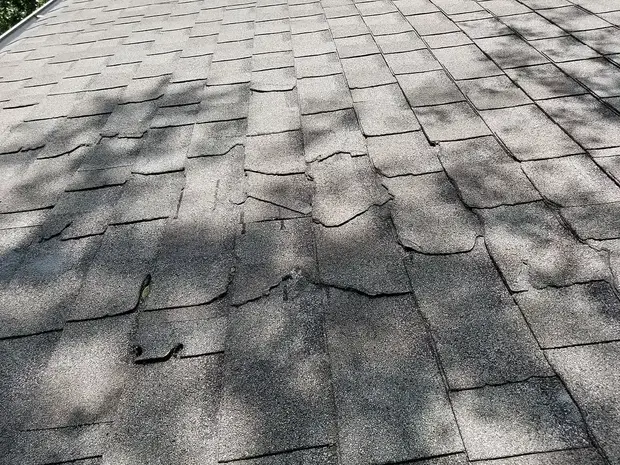
Hail fractures shingle mats from within, often invisibly - the roof can look whole from the street while its surface has been spent stone by stone.
Read the Guide
Water enters high and shows low: it rides underlayment, decking and rafters before it drops, so the stain marks the end of a journey that can cross rooms.
Problem: Water enters high and shows low: it rides underlayment, decking and rafters before it drops, so the stain marks the end of a journey that can cross rooms.
Solution: Trace, do not guess: attic evidence read against the roof above it, and a controlled water test where needed, name the entry before any sealant is opened.
When to call: Call when a stain appears or grows - and photograph it with the weather noted, because the pattern against storms is half the diagnosis.
Every leak tells a story with a misleading narrator: the ceiling stain. It looks like a location, and it is really a destination - the place where traveling water finally ran out of path. Homeowners and hurried handymen patch the roof above the stain and are surprised when the drip returns, because the entry was upslope, sometimes rooms away. This guide explains how water actually travels through a roof assembly, how a professional trace follows it backward, and what your observations contribute to solving it.
Hail is the signature threat. Central Oklahoma sits in the part of the country where hailstones reach golf-ball size and larger with some regularity - the May 2010 hailstorm alone worked over roofs across the whole metro in a single afternoon. Bruised, cracked and granule-stripped shingles may not leak the week after a storm; they fail across the following seasons, which is why hail here is an inspection question before it is a repair question.
A pitched roof is a layered slope: shingles over underlayment over decking, with rafters beneath. Water that enters at a ridge vent, a flashing joint or a hail-split shingle lands on the underlayment or deck and runs downhill under gravity - along the deck's surface, down a rafter's edge, across a ceiling joist - until a joint, a light fitting or a low point lets it drop. The journey can cross a whole house in a long ranch plan.
Wind edits the map. Driven rain enters at joints that shed vertical rain perfectly, which is why some leaks appear only in storms from one direction. Freeze-thaw edits it seasonally: an entry that weeps in January may sleep all summer. The leak's weather pattern - which rain, which wind, which season - is diagnostic evidence, and the homeowner who logs it has done half the tracer's work.
The trace starts in the attic, where water leaves its signature: stained decking, darkened rafter edges, damp insulation mapped in a path. Read against the roof above, the path points upslope to a short list of candidate entries - flashing, valley, penetration, split or seam. The candidates are then examined on the roof, in the order the evidence ranks them.
Where the ranking stays ambiguous, the water test settles it: sections wetted in sequence, low to high, with an observer below, until the drip reproduces. It is slow, unfashionable and decisive - it converts the leak from testimony into demonstration. Repairs scoped from a demonstrated entry hold; repairs scoped from a plausible story hold only when the story was lucky.

A fair share of ceiling water in Oklahoma City homes never crossed the roof surface: cracked chimney crowns and failed counter-flashing on the masonry side, siding joints above the roof line, dormer window heads, and plumbing vents whose leak is the pipe, not the boot. The trace that stops at 'somewhere up there' misses these; the trace that reads the whole intersection finds them.
Condensation completes the list. In cold snaps, household moisture frosts the deck's underside in a poorly ventilated attic and drips on thaw like a textbook leak. The giveaway is timing - cold without rain - and the cure is ventilation and air-sealing, not shingles. A tracer who checks the weather pattern against the drip pattern catches it in one visit.
A fair share of 'roof leaks' in Oklahoma City homes enter through the roof's neighbors: cracked chimney crowns and failed counter-flashing on the masonry side, siding joints above the roof line, window heads on dormers, and plumbing vents whose leak is the pipe, not the boot. The trace that stops at 'somewhere up there' misses these; the trace that reads the whole intersection finds them.
Condensation completes the impostor list. In cold snaps, attic moisture from the house below can frost the deck's underside and drip on thaw like a textbook leak. The giveaway is timing - cold without rain - and the cure is ventilation and air-sealing, not shingles. A tracer who checks the weather pattern against the drip pattern catches it in one visit.
The hose test is unfashionable because it is slow: sections wetted in sequence, low to high, an observer in the attic, patience while the assembly's travel time runs. But it converts the leak from testimony into demonstration - this section, this joint, this drip, repeatable on demand. Repairs scoped from a demonstrated entry hold; repairs scoped from a plausible story hold only when the story was lucky.
Homeowners can help the test work: attic access cleared, the stain's history ready, and nothing sealed or disturbed since the leak last showed. Every well-meaning pre-visit patch erases evidence the test would have used, which is why the guide's standing advice is photographs, not sealant.
Leaks obey a rule roofers learn early: water enters where it wants and shows where it pleases. It can enter at a vent on the ridge and appear as a stain two rooms downhill, having ridden a rafter the whole way. Repair work is therefore a tracing discipline - from the stain upward, through the attic's water-marked wood, to the entry - and its quality is measured by whether the leak's story was actually solved, not by how much sealant was spent near the stain.
That is the service side of this guide's subject. When you are ready, the Roof Repair page carries the process, the coverage by neighborhood and the number to call.
When it drips: which weather, which wind, how long after rain starts. Photograph the stain at first sight.
Catch the drip and move what water ruins. Do not seal anything - fresh sealant buries the evidence the trace needs.
The entry is named from the water's path, read below and confirmed above - not guessed from the ceiling.
The fix lands at the journey's start, and the first storms after it are the verification.
Note the weather pattern of every drip - wind, steady rain, or thaw - before you call.
Photograph stains at first appearance and again as they change.
Keep the attic hatch clear and reachable year-round.
evidence first, sealant after the trace.
A tracing visit should end with the entry named and shown - the joint, split or detail that admits the water - supported by the attic evidence and, where used, the water-test result.
It should also grade the surface around the entry, so you learn whether the leak is an isolated event or the first report of a slope's end. Both answers change what the repair money should do.
A professional trace is a method, not a hunch: the stain's history taken against the weather, the attic read for the water's path, candidate entries ranked by evidence, and a controlled water test - low to high, section by section - wherever the ranking stays open. The repair is then scoped at the demonstrated entry, the surrounding surface graded, and the finding documented so any recurrence starts from a map instead of a mystery.
Patching the roof above the stain and calling the journey's end its start.
Sealing first and tracing later - the sealant buries the evidence.
Re-patching a repeat leak instead of widening the diagnosis to the slope.
chimney crowns, siding joints, pipes and attic condensation.
A leak is a message with an address written in a code of stains, weather and travel paths. The trace reads the code. If your ceiling is talking, the worst response is a guess with a sealant gun - and the right one is a call that starts in the attic.
Hail fractures shingle mats from within, often invisibly - the roof can look whole from the street while its surface has been spent stone by stone.
Read the GuideStorm evidence fades on a schedule of weeks: granules wash, creases settle, debris gets hauled - and undocumented damage becomes undecidable damage.
Read the GuideBecause the assembly is layered and sloped. Water enters high, travels along underlayment, decking and rafters, and drops where the path ends. The stain is the journey's end; the repair belongs at its start, which the trace identifies.
You can gather excellent evidence: the stain's upslope path, damp insulation, daylight at penetrations. Naming the exact entry usually takes the roof-side read and sometimes the water test - but your attic observations, honestly reported, shorten the visit considerably.
That pattern is the clue, not a mystery. Direction-specific leaks point at wind-driven entries - lifted tabs, flashing joints, valley edges on the storm side. Tell the tracer which storms produce it; the candidate list narrows at once.
No. Sealing the ceiling hides the symptom while the entry keeps drinking above it - the deck and insulation pay for the cosmetics. Catch the water, protect the room, and let the entry be fixed at its source.
One call connects you with a roofing professional serving Oklahoma City and the surrounding communities - inspection, repair, replacement and upkeep.
📞 Call Now