Finding a Roof Leak: An Oklahoma City Tracing Guide
Water enters high and shows low: it rides underlayment, decking and rafters before it drops, so the stain marks the end of a journey that can cross rooms.
Read the Guide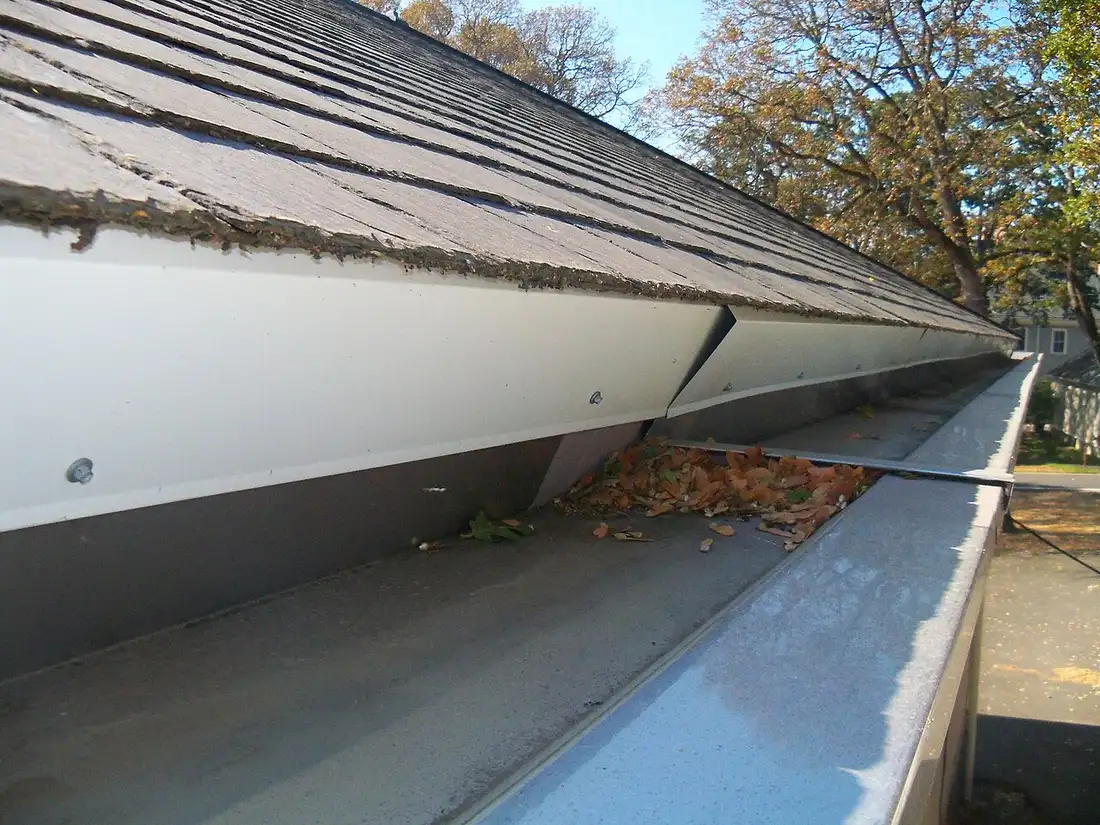
Oklahoma's winter roof enemy is episodic ice: storms that glaze trees and roofs in a single night, then freeze-thaw that works every crack and lifted tab wider.
Problem: Oklahoma's winter roof enemy is episodic ice: storms that glaze trees and roofs in a single night, then freeze-thaw that works every crack and lifted tab wider.
Solution: The defenses are thermal and structural: attic air-sealing, insulation and ventilation to keep melt patterns even, eave protection, and trees pruned off the roof before the glaze arrives.
When to call: Call after any ice load that drops limbs on the roof, splits seams or starts eave leaks during a thaw - and for the assessment that maps your home's dam-prone eaves before winter.
Oklahoma winters are mild until they are not. The December 2007 ice storm left much of the state in the dark under inches of glaze; the October 2020 storm iced trees still in leaf and stripped canopies across the metro. Between those events sit the quieter winters of freeze-thaw and the occasional snow. This guide covers what ice does to roofs here - the dams, the loads, the limb falls - and the preparations that fit a climate where the threat is episodic rather than annual.
Hail is the signature threat. Central Oklahoma sits in the part of the country where hailstones reach golf-ball size and larger with some regularity - the May 2010 hailstorm alone worked over roofs across the whole metro in a single afternoon. Bruised, cracked and granule-stripped shingles may not leak the week after a storm; they fail across the following seasons, which is why hail here is an inspection question before it is a repair question.
Glaze ice adds weight and grip: it loads branches until they fail onto roofs below, coats every surface, and then - as it melts and refreezes across days - works water into cracks, under lifted shingles and along flat-roof seams, where the freeze wedges each opening a little wider. The storm's roof damage is often less visible than its tree damage, and it reports later, as leaks at the details the ice pried.
The tree half of the event is the roof half. The metro's mature oaks, elms and pecans carry ice loads their limbs were never shaped for, and the limb that lands on a slope is a penetration with a ton of leverage behind it. In 2020, canopy loss across whole neighborhoods rewrote the shade map - surviving trees leaned, roofs took falls, and gutters collected the rest.
An ice dam needs three ingredients: snow or ice on the roof, an attic warm enough to melt the layer touching the shingles, and eaves cold enough to refreeze that melt at the edge. The dam ponds meltwater behind it, and ponded water does what ponded water always does - it finds the laps and joints that running water never tests, and the ceiling below an exterior wall reports it during the thaw.
Oklahoma's episodic pattern makes dams more likely here, not less: houses are rarely detailed with dams in mind, insulation is uneven, and the first dam in five winters finds every heat leak the mild years let accumulate. The cure is thermal - air-sealing the ceiling plane, evening the insulation, balancing ventilation - because the dam is a heating problem that presents as a roofing one.
Between storms, the ordinary winter work continues: water in a hairline crack by day, ice in it by night, the crack wider by spring. Sealant splits, flat-roof seams stress, and snow that stacks on shaded north slopes and low-slope roofs melts and refreezes at the eaves. None of it makes a headline; all of it is on the spring inspection list.
That is the winter bargain in this climate: the season rarely destroys roofs outright, but it edits the small print of every roof it touches - and spring's storm season reads the edits aloud, at volume, in May.
Oklahoma ice damage differs from northern patterns in rhythm: not every winter, but in the winters that stack glaze on a hard cold snap. That episodic pattern is exactly what makes it damaging here - houses are not built or maintained with ice in mind, insulation is uneven, and the first glaze in five years finds every weakness the mild winters let accumulate.
The same rhythm hides the cause. A homeowner meets an eave leak as a random bad-luck event rather than a repeatable thermal pattern, patches the ceiling, and meets it again at the next snow-plus-freeze. Naming the pattern - this eave, this attic, this heat leak - is most of the cure, because the fix list follows the map.
Smooth metal surfaces shed ice and snow in sheets once sun or house heat loosens the bond, and a sliding slab carries real force: gutters tear, vent pipes bend, and anything below the eave takes the landing. Snow retention bars and guards exist precisely for this - they hold the pack to melt in place. On metal roofs in our winters, retention is not a northern affectation; it is the detail that decides whether a thaw is an event.
Ice at metal seams follows the same submersion rule as shingles: seams shed running water beautifully and resist standing water poorly. Eave ice that ponds meltwater against a seam line tests it in a way rain never does - one more reason the thermal fix, keeping melt patterns even, protects every roof type at once.
Maintenance is the economics of small numbers. The items on a yearly list - sealant, drainage, a handful of fasteners or lifted tabs - are individually minor. Their compounding is not: each one defers a failure mode that costs many times its price. Over a twenty-year roof life, the maintained roof and the neglected roof are not the same roof at different ages; they are different financial stories entirely.
That is the service side of this guide's subject. When you are ready, the Roof Maintenance page carries the process, the coverage by neighborhood and the number to call.
Note which edges grow icicle lines and thaw leaks; that map is the thermal fix list.
Air-seal ceiling penetrations, even insulation, balance attic ventilation - the dam retires when its melt pattern does.
Dead and roof-leaning limbs come down on your schedule, not the ice's.
Limbs on slopes, split seams, new eave stains during thaw - documented while the evidence is fresh.
After any snow on a cold snap, check ceilings along exterior walls during the thaw.
Log which eaves grow icicle lines - that is the dam map, winter by winter.
Keep soffit vents clear of insulation and storage; intake is half the system.
Never chip ice off the roof surface; the shingles come away with it.
An ice assessment should map the dams and glaze risk to their sources: which ceiling penetrations leak warmth, where insulation thins, how the ventilation balances, and which trees stand over the roof - with the eave protection state of the current roof reported alongside.
The resulting plan should separate the thermal work (sealing, insulation, ventilation) from any roof-side repairs and tree work, with each priced and sequenced on its own merits.
A professional winter assessment reads the house as a thermal system with a roof on it: ceiling-plane air leaks found, insulation depth and evenness graded, ventilation intake and exhaust balanced, eave protection stated, and the tree canopy over the roof assessed for ice-load risk. The plan that follows separates heating work from roofing work from tree work - because ice problems are solved in the system that caused them.
Patching thaw stains while the heat path that built the dam stays open.
Chipping ice off shingles and taking the surface with it.
Assuming a mild-decade climate exempts the house from dam preparation.
Leaving canopy limbs over the roof through another glaze season.
Ice looks like a roofing problem and behaves like a heating and trees problem. Fix the heat path and prune the canopy, and the dams retire; patch the ceiling and they re-enlist at the next cold snap. The assessment that reads your attic honestly is the five-minute call that ends the cycle.
Water enters high and shows low: it rides underlayment, decking and rafters before it drops, so the stain marks the end of a journey that can cross rooms.
Read the GuideHail fractures shingle mats from within, often invisibly - the roof can look whole from the street while its surface has been spent stone by stone.
Read the GuideEpisodically, yes - any climate that pairs freezing temperatures, roof snow or glaze, and heat-leaking attics grows them, and this one adds famous ice storms to the bargain. The episodic rhythm means susceptible houses are rarely prepared, which is most of the damage.
That timing is the dam's signature: water ponded behind ice at the edge, entering laps that shed running rain all year. The fix conversation is about your attic's heat path and the eave's protection, not about a hole.
Treat it as storm damage: keep clear of the slope and any downed lines, photograph before anything is moved, and call for covering once the tree work is safe. Ice-loaded limbs keep moving after they land - the removal is specialist work.
It changes them. Metal sheds glaze and snow in slides - which is why snow retention matters above entries and walks - and its seams resist standing meltwater differently than shingle laps do. The thermal rules underneath it stay the same.
One call connects you with a roofing professional serving Oklahoma City and the surrounding communities - inspection, repair, replacement and upkeep.
📞 Call Now